Countertop Ice Machine Buying Guide 2026: Fast Ice, Quiet Operation, and Small-Kitchen Setup
Countertop ice machines are trending in 2026 because people want café-style cold drinks at home without waiting for freezer trays. But most buying mistakes still come from one issue: shoppers compare only daily capacity and miss the details that actually affect daily use, like cycle speed, cleaning access, and noise behavior at night.
This guide breaks down what to prioritize, what to avoid, and how to build a practical cold-drink station with the products you can actually buy now.
Quick answer: what matters most in 2026
- Fast first batch (typically 6–10 minutes) matters more than peak daily capacity.
- Choose a model with easy drain and clear cleaning routine.
- Plan your placement around ventilation and sink access.
- Use insulated storage habits; countertop units are for making ice, not long-term freezing.
- Pair with safe boiling/chilling workflow tools for all-season use.
Why this category is growing right now
Search intent has shifted from “do I need one?” to “which size and speed fit my routine?” The practical use case is now clear: morning iced coffee, post-workout drinks, guests on weekends, and compact apartment kitchens where freezer output is limited. In short, convenience and consistency are the real trend drivers.
How to choose the right countertop ice machine
1) Prioritize cycle speed over marketing capacity
A high “lbs/day” number looks great on a product card, but your experience depends on how quickly the first and second batches arrive. For everyday use, the first 30 minutes matter most.
2) Check basket size and refill behavior
Some units create frequent small batches. Others deliver fewer, larger batches. If you host often, smoother refill cadence is more useful than one large headline metric.
3) Review maintenance reality
Look for a straightforward drain process and wipe-down access around the reservoir. If maintenance is awkward, performance drops quickly and taste can suffer.
4) Match noise profile to your space
For studio apartments or open kitchens, compressor and fan tone matters as much as dB numbers. If the unit runs near your living area, choose quieter operation over maximum output.
A practical setup using current catalog products
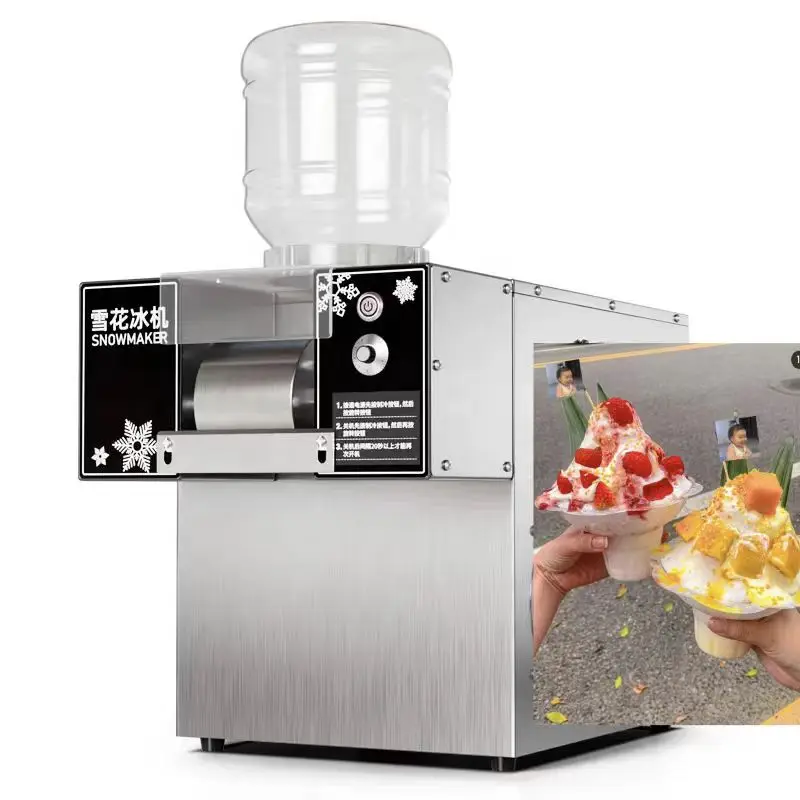
For an at-home cold and hot drink zone, start with the BOTH commercial/home snowflake ice machine as your core ice appliance, then pair it with a dependable hot-water option like the Home Thermostatic Kettle for tea, coffee prep, and quick cleaning water.
If you are optimizing a compact counter, add a portable cooking or prep companion such as this foldable-handle cookware set for multi-use drink and snack prep during gatherings.
Common mistakes to avoid
- Placing the machine flush against a wall and blocking airflow.
- Assuming produced ice is fully frozen for storage; many cubes need immediate use or transfer.
- Ignoring regular clean cycles, causing off flavors and reduced performance.
- Buying by maximum capacity while your real need is rapid first batch.
- Using poor-quality water, which affects taste and machine longevity.
Small-kitchen placement plan
Leave breathing room on each side, keep the unit close to a sink for refill and drain convenience, and store a separate insulated container for overflow ice. If you entertain frequently, pre-run two cycles before guests arrive and hold extra in a freezer-safe container.
Maintenance routine that keeps output reliable
Wipe interior surfaces regularly, flush the system based on manufacturer interval, descale when needed, and avoid standing water after use. Build a simple weekly checklist and you will preserve both taste and speed.
For related setup ideas, see Portable Electric Kettle Buying Guide 2026 and USB-C Hub Setup Guide 2026 for workspace-friendly appliance planning.
Image references
- Featured image source (free stock): https://source.unsplash.com/1600×900/?countertop,ice,machine,kitchen
- Alt text: Countertop ice machine producing fresh ice cubes in a modern kitchen
FAQ
How fast should a good countertop ice machine be?
Most good consumer units deliver the first batch in roughly 6 to 10 minutes.
Can I store produced ice inside the machine all day?
Not reliably. Many units are insulated, not true freezers, so transfer ice for long storage.
How often should I clean it?
Light cleaning weekly and deeper cleaning on schedule keeps taste and performance stable.
Does water quality really matter?
Yes. Better water improves taste and reduces scaling issues over time.
Is a larger daily capacity always better?
No. For most homes, cycle speed and ease of maintenance matter more.
Final recommendation
In 2026, the best countertop ice setup is not the biggest machine. It is the one that produces quickly, cleans easily, runs quietly enough for your home, and fits your actual drink routine. Buy for use pattern first, not headline specs.